
You’ve likely heard of Brian Johnson. He’s the billionaire citizen scientist who has offered himself up as ‘guinea-pig’ in the quest for longevity. But Johnson didn’t start out as the internet’s favorite eternal-youth experiment. He first built Braintree, a payments company that later bought Venmo, then sold the whole package to PayPal for a cool $800 million. Some people might take that win, buy a boat, maybe start a podcast. Johnson decided to turn sám into a science project instead.

Since then he’s poured his fortune and time into Project Blueprint, a sprawling, hyper-measured routine meant to slow his biological aging. Think dozens of daily supplements, strict sleep schedules, color-coded meals, lab tests for nearly everything your body can produce, and more graphs than a high school statistics class. It’s certainly impressive. He aims to “let his body run itself,” a claim which is perhaps contradicted by the sheer amount of spreadsheets he keeps.
He also founded Jádro, a neurotech company working on brain-interface tools, and launched the OS Fund to back scientists who tinker with life, atoms, and intelligence. It’s seriously cool stuff. But it’s his personal quest for youth that has made him a headline magnet: blood plasma swaps with his son, experimental therapies, and a determination to treat aging like a puzzle to solve.
Why Psilocybin has Caught Bry’s Eye
In public posts in 2025 Johnson announced he was starting a three-month protocol of one 5-gram psilocybin (magic-mushroom) dose per month — a dose size usually described as “heroic” in psychedelic culture and long associated with strong mystical or rozpuštění ega experiences. He explained that this shroom-shesh is an experiment to explore potential longevity effects suggested by recent preclinical science. Johnson posted a short protocol note on LinkedIn and discussed the plan on his Blueprint and social accounts. Unsurprisingly, it garnered a lot of attention from fans and sceptics alike.
The Fascinating Science Behind the Hype
Two pieces of work have been particularly visible in the conversation around psilocybin and aging.
1) A mouse/ cellular aging paper in Nature
A 2025 paper reported that treatment with psilocin (the active metabolite of psilocybin) extended cellular lifespan in cell models and improved survival in aged mice, with treated animals showing both longer survival and more “youthful” phenotypes by several measures. The authors proposed mechanisms including reduced oxidative stress, improved DNA repair responses, and effects on telomere maintenance, all classic hallmarks in aging biology. The headline finding — improved survival in aged mice — is striking, and explains why people thinking about longevity took notice. (Important caveat however: mice → humans is a big step.)
2) A human-cell iPSC study (eLife)
A separate studium used human iPSC-derived cortical neurons (lab-grown human neurons) and treated them with psilocin, finding rapid and sustained changes consistent with increased neuroplasticity: neurons formed more branches, produced more BDNF (a growth factor), and showed synaptic changes that lasted days. Those cellular shifts map neatly onto a growing body of work suggesting psychedelics act as “psychoplastogens” — molecules that open a window of enhanced plasticity in the brain. That mechanism is often invoked to explain long-lasting therapeutic effects seen in clinical trials for depression, PTSD and addiction.
Taken together, these papers hint at psilocybin’s potential as an anti-aging tool.
Why a Figure like Johnson Matters (Beyond the Headlines)
Bryan Johnson is not just another wealthy person taking a drug — he’s both an investor and a public experimenter whose choices shape perception and funding priorities.
- Funding and attention: Johnson’s public interest can funnel money (and attention) toward specific research lines, accelerating studies that otherwise might struggle for pilot funding. That can be good — we need more rigorous trials to answer the mouse→human question.
- Public messaging risk: When a highly visible person frames an unproven regimen as an “experiment,” casual readers may interpret it as endorsement. That can lead to self-medication outside clinical oversight — something many clinicians warn against.
- Ethics and influence: Extreme self-optimization projects raise thorny questions about fairness, access, and social values. However, what is is interesting about psilocybin (if proved to be effective, and legality pending) is that anyone can grow magic mushrooms at home. As Johnson shares all his research and data for free, we may soon know how effective it truly is.
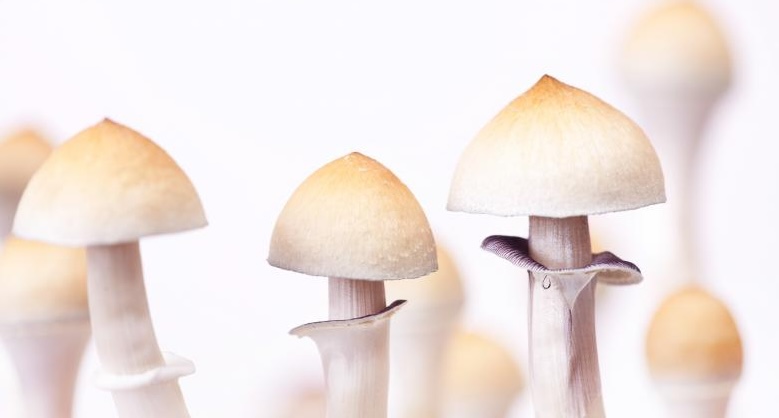
A Thoughtful Takeaway
The merging of Johnson’s biohacking ethos with recent psilocybin research makes for a compelling story: a person who measures every biological function sees a molecule that may rewire cells and circuits, and asks, “what if that helps the body stay younger?” Recently published research supports the idea that psilocybin is not only a psychiatric tool, it also could also be the key to extended youth. That’s worth investigating.
If the science bears out, so we may soon be watching the opening chapter of an entirely new wellness paradigm. If not, we’ll at least have learned more about the biology of aging and how mind-altering molecules influence the body.
As of now, we’re still waiting to hear the results of Bryan’s first trip into the psychedelic cosmos. More as it comes!






 Czech
Czech  English
  Chinese
  Danish
  Dutch
Dutch  Estonian
  Finnish
  French
  German
  Hungarian
  Italian
  Japanese
  Latvian
  Lithuanian
  Polish
  Portuguese
  Romanian
  Slovak
  Slovenian
  Spanish
  Swedish